Last updated on November 11, 2026 by Emma Collins
If you are asking what pressure a boiler should be, the short answer is that most UK sealed central heating systems should read 1 to 1.5 bar when the heating is off and the system is cool. When the heating is running, the reading usually rises to somewhere between 1 and 2 bar, and that rise is normal. Your boiler manual has the final say, so if it gives a different range, follow it.
This guide covers how to read the gauge, why the needle moves, how to top up with the filling loop, how to bring an overfilled system back down, and when to stop and call a Gas Safe registered engineer. If you have just bled the radiators, the gauge often drops a little, which is normal.
What boiler pressure should be
British Gas, Worcester Bosch and Vaillant all give the same cold range of 1 to 1.5 bar for sealed systems. Vaillant adds that 1 to 2 bar is typical with the heating on, and that pressure should stay below the upper limit of 3 bar.
| Situation | Typical reading | What to do |
|---|---|---|
| Heating off, system cool | 1–1.5 bar | Nothing. This is the normal range |
| Heating on | Often 1–2 bar | Normal, as long as it stays below 3 bar |
| Too low (Worcester Bosch) | Below 0.5 bar | Water has been lost; top up and look for the cause |
| Too high (Worcester Bosch red zone) | About 2.75 bar or more | Find out why; get an engineer if it does not settle |
| After overfilling (Vaillant) | Above 2.5 bar at room temperature | Reduce the pressure before running the boiler |
There is no single perfect number. A cold reading of 1 bar and a cold reading of 1.5 bar are both fine, so there is no need to top up just to nudge the needle from one to the other.
How to read your boiler pressure gauge
Check the gauge with the heating off and the radiators cool, because that is the reading the 1 to 1.5 bar range refers to.
- Dial gauge: a needle on a scale marked in bar. Many have a green band for the normal range and red at one or both ends. Red at the low end usually means too little pressure, and red at the high end too much. Markings vary between makes.
- Digital display: some boilers show pressure on the screen, sometimes only after pressing an information button. The manual will tell you which.
Where to look depends on the boiler. On a combi, the gauge is almost always on the front control panel or screen. On a system or conventional boiler, British Gas says it may be near the hot water cylinder, often beside a smaller red expansion vessel. If you cannot find it, check the manual rather than taking covers off.
A habit I would recommend to anyone: once the system is cold and settled at a normal reading, take a photo of the gauge on your phone. Next time something seems off, you have your own “normal” to compare against.
Why boiler pressure rises when the heating is on
Water expands as it heats. A sealed system holds a fixed amount of water, so when the heating comes on the pressure goes up, then drops back as the system cools. A rise from around 1–1.5 bar cold to somewhere under 2 bar hot is expected.
A bigger jump is worth noting. Worcester Bosch says that if pressure rises by more than 1 bar once the heating is up to temperature, the expansion vessel may need repressurising. The vessel absorbs the extra volume of hot water, and when it is not doing its job, pressure climbs further than it should. That is a job for a service engineer, not something to adjust yourself.
Why boiler pressure keeps dropping
Bleeding radiators. British Gas lists recent radiator bleeding as one of the most common causes of lost pressure. Letting air out lets a little water out too, so check the gauge after you have bled and top up if it has fallen below 1 bar. Our guide on how often you should bleed radiators covers the method.
Emma’s tip: When I bleed the radiators in autumn, I go round the whole house first and check the boiler gauge once at the end, with the system cool. Topping up after every single radiator is fiddly and makes it easy to overfill.
Leaks. A slow leak from a radiator valve, a joint or pipework will pull the pressure down over days or weeks. Vaillant suggests looking for damp spots or rust around radiators and flaking wallpaper. Some pipes run under floors and behind walls, so you will not always find the leak yourself.
Emma’s tip: If I suspect a slow leak, I tuck a folded sheet of kitchen paper under each radiator valve overnight. A damp mark shows up far more clearly on white paper than on a carpet or dark floorboards.
Normal top-ups. Worcester Bosch says a sealed system will usually need topping up once or twice a year. If you are doing it much more often than that, something is losing water, so contact your installer or an engineer rather than topping up week after week.
Emma’s tip: I write the date on a sticky label inside the boiler cupboard door every time I top up. If the dates start creeping closer together than once or twice a year, that is my cue to book an engineer rather than keep topping up.
| What you notice | Likely cause | First action | Call a Gas Safe engineer if |
|---|---|---|---|
| Pressure dropped after bleeding | Water lost through the bleed valve | Top up to 1–1.5 bar | It keeps falling afterwards |
| Slow drop over weeks | Small leak somewhere in the system | Check radiators, valves and visible pipes | You need to top up more than once or twice a year |
| Sudden drop or a visible leak | Leaking valve, joint or pipe | Close the filling loop; contain any water | Straight away |
| Rises more than 1 bar once hot | Expansion vessel may need repressurising | Note the cold and hot readings | Always, as the vessel needs a service engineer |
| Stays high after cooling | Overfilled, or an expansion vessel problem | Bleed a radiator if it is above 2.5 bar | It does not come down, or keeps creeping up |
How to increase boiler pressure safely
Most sealed systems are topped up through a filling loop: a short braided hose with one or two valves, usually under a combi boiler, that lets cold mains water into the heating circuit. Some boilers have a built-in filling key or lever instead. Designs differ, so keep your manual open while you do this.
British Gas gives these steps for the most common type of filling loop on a combi:
- Switch the boiler off and let it cool.
- Check both ends of the filling loop are securely attached.
- Open the valve (or both valves) slowly so cold mains water enters the system. You should hear it running.
- Watch the gauge until it reaches 1 to 1.5 bar.
- Close the valve or valves fully.
- Switch the boiler back on and reset it if needed.
- If your loop is the removable type, undo it, catching any drips in a cloth, and store it safely.
Do not walk away while the valves are open, because the needle can climb quickly. I find it easiest to have one hand on the valve and my eyes on the gauge the whole time, and to stop a touch early, since you can always add a little more.
If you have a system or conventional boiler, British Gas says the filling valve is often in the pipework near the cylinder and the small red vessel: open it a little until the gauge reads 1 to 1.5 bar, then close it. Layouts vary, so if you cannot identify the right valve with certainty, leave it and ask a heating engineer.
How to lower boiler pressure if it is too high
If you have overfilled the system, Vaillant’s advice is simple. Below 2.5 bar at room temperature, no action is needed, although bleeding a couple of radiators will bring it down. Above 2.5 bar, reduce the pressure before running the boiler.
To bring it down:
- Switch the heating off and let the radiators cool.
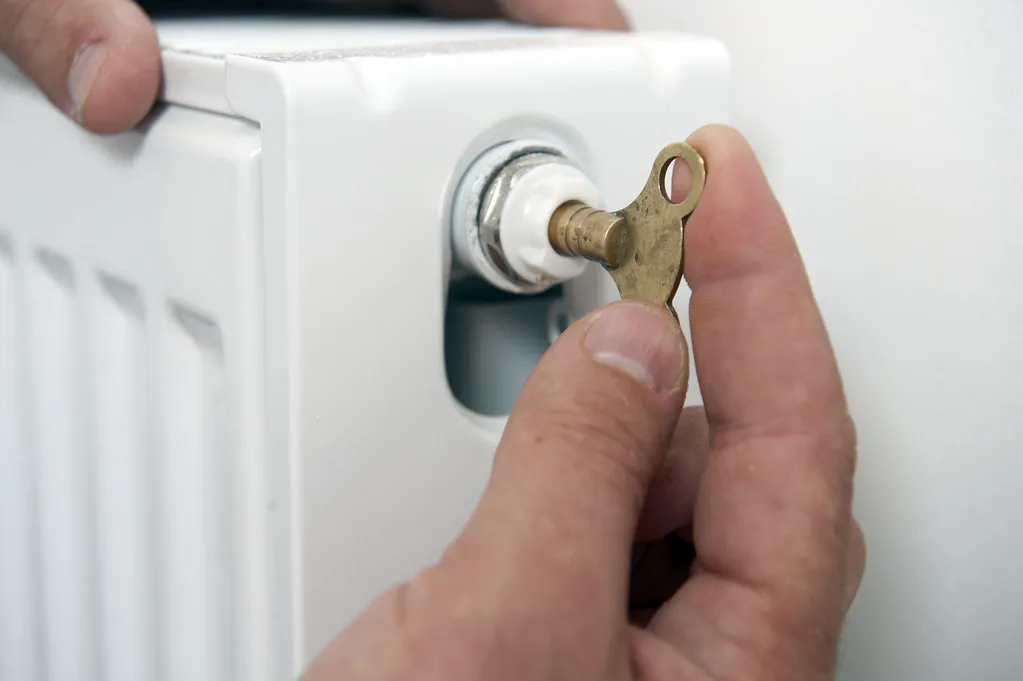
- Hold a cloth under the bleed valve of a radiator you can reach easily.
- Open the valve slowly with a radiator key and let out a little air and water.
- Close it and check the boiler gauge.
- Repeat on the same or another radiator until the cold reading is back in range.
Do not open the pressure-relief valve yourself. British Gas warns that the water released can be 70°C to 80°C and can scald, and the boiler or pipes can be damaged. If that valve is leaking, turn the boiler off, put a container under it if you can do so safely, and call an engineer.
When to stop and call a Gas Safe engineer
Topping up and bleeding are the limit of what most people should do. Stop and get help if:
- the pressure keeps dropping after you have topped up
- it rises by more than 1 bar when the heating is hot
- it stays high when the system is cold
- the pressure-relief valve is leaking or the pipe outside is dripping
- you cannot identify the filling-loop valves
- the boiler shows a fault code you cannot clear with a simple reset
Any work on a gas boiler itself must be done by a Gas Safe registered engineer. You can check an engineer’s registration on the Gas Safe Register. If repeated faults mean you are weighing up a replacement, our guide to new boiler costs in the UK covers what to expect.
Low pressure is not a gas emergency. A gas smell, soot marks or a carbon monoxide alarm are different. Get everyone out of the property and call the Gas Emergency Service on 0800 111 999 (Great Britain). In Northern Ireland, use the emergency number on your gas supplier’s bill.
What about open-vented systems?
Not every home has a sealed system. Many older houses have an open-vented, tank-fed system with a feed and expansion tank in the loft. These usually have no pressure gauge on the boiler and no filling loop, so the 1 to 1.5 bar figure and the steps above do not apply. If your boiler has no gauge, do not assume you have a filling loop, and do not try to add water. Check the manual or ask a heating engineer.
If you are without heating while you wait for an engineer, these tips on keeping the house warm without central heating can help in the meantime. And if a room still feels cold once the pressure is right, it may simply be that the radiator is too small for it, which our guide to what size radiator you need explains.
Frequently asked questions
What should boiler pressure be when the heating is off?
Most UK sealed systems should read 1 to 1.5 bar when the heating is off and the system is cool. If your boiler manual gives a different range, follow the manual.
What should boiler pressure be when the heating is on?
It usually sits between 1 and 2 bar with the heating running, because heated water expands. Vaillant says it should stay below 3 bar. A rise of more than 1 bar once hot can point to an expansion vessel problem.
Why does my boiler pressure keep dropping?
The most common causes are bleeding radiators and leaks from valves, joints or pipes. Topping up once or twice a year is normal; needing to do it much more often means you should call an engineer.
How do I increase boiler pressure?
On most sealed systems, use the filling loop. Switch the boiler off and let it cool, open the loop’s valve or valves slowly, watch the gauge until it reads 1 to 1.5 bar, then close them fully and switch the boiler back on. Follow your manual, as designs vary.
Is low boiler pressure dangerous?
British Gas says low pressure will not harm you physically. It can make the boiler less efficient and noisier, affect your hot water and, over time, damage the system, so get a Gas Safe engineer if it keeps happening.
Conclusion
For most sealed systems, a cold reading of 1 to 1.5 bar is right, and a rise to under 2 bar with the heating on is normal. If it is low, top up slowly through the filling loop. If it is a little high after overfilling, bleed a radiator once the system is cool. Leave the pressure-relief valve, the expansion vessel and anything inside the boiler to a Gas Safe registered engineer, and call one if the pressure keeps dropping, jumps by more than 1 bar when hot, or stays high when cold.

Emma Collins is the editor of The Homely Way, a UK home and lifestyle magazine. She writes practical, plain-English guides on home improvement, cleaning, heating and saving money around the home — always with UK prices, UK products and real-world costs, and no jargon. When she is not writing, she is planning the next guide.